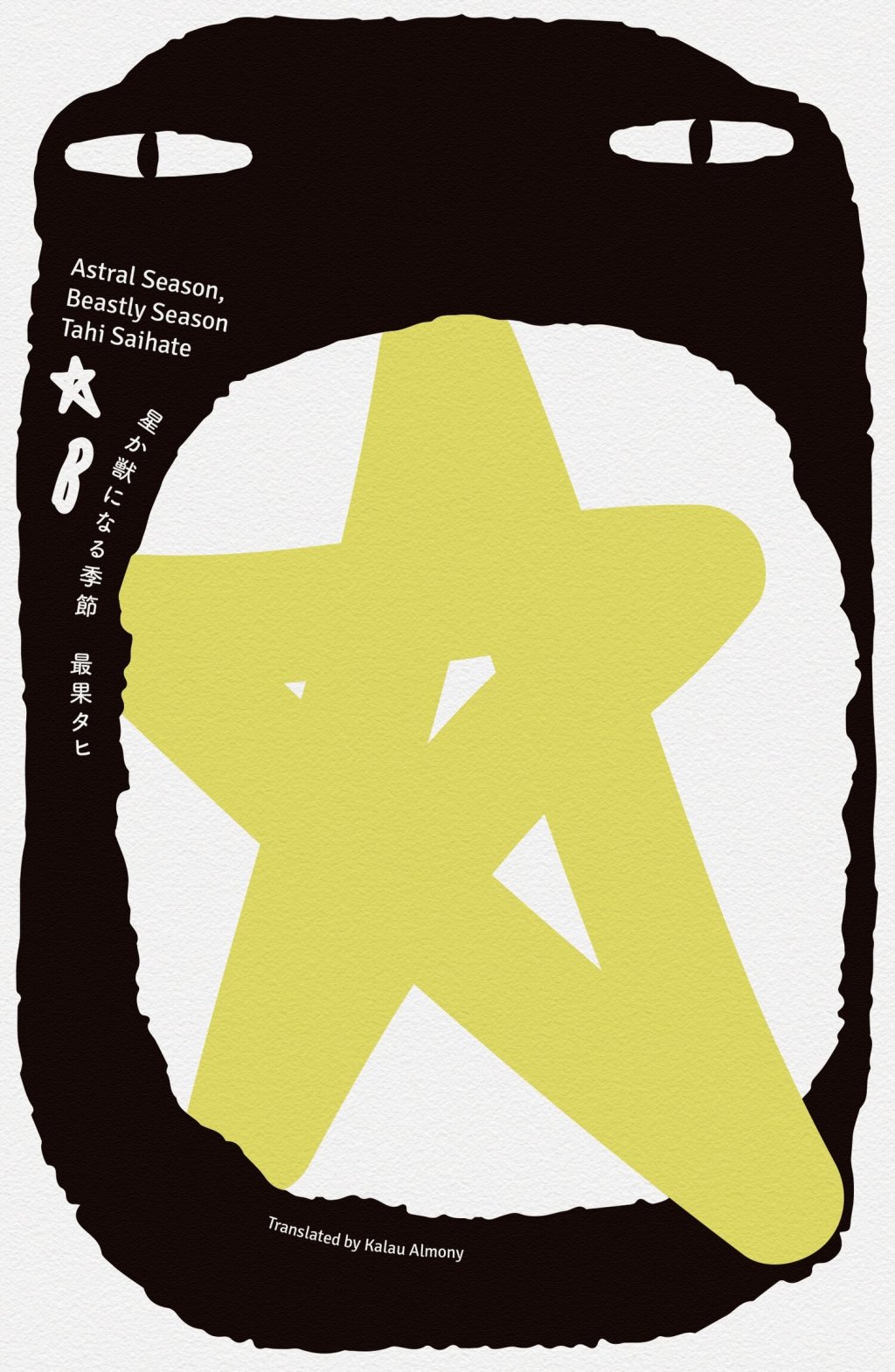
“They say that at the age of seventeen, you either become a star or a beast.”
Astral Season, Beastly Season by Tahi Saihate is a bloody coming to age novel from Japan.
A J-pop idol has brutally murdered and dismembered her boyfriend, and two teenage boys–her devoted fans–go to extreme lengths to save her from imprisonment.
While seeped in teenage angst, this is a story of idolatry and a critique of fandom culture. It explores how one’s devotion to one’s idols can border on religious, sacrificial worship. But the most interesting idea explored here is how we tend to project onto other people, morphing them in our minds into whatever we want them to be (particularly true of men regarding women, as highlighted in this book).
In the first half of the book, our narrator is so devoted to the image he has made of his favorite J-pop idol Mami that he refuses to accept any information that goes against his own image of her. His love for and adoration of Mami interestingly resembles hatred and criticism, which poses as an example of the tendency of men to simultaneously hate and love women, each often with the same vigor.
Throughout this book, author Tahi Saihate also brings up the idea of idolatry as a form of escapism in order to cope with depression. This is true to the experience of many young persons, and can be found in the depth of all types of fandoms. Some people will devote their lives and their minds to a special interest so as to distract themselves from their own misery. But, as the author discusses, this coping mechanism for depression is a slippery slope.
This book also includes an exploration of misogyny, budding from adolescence: the male belief that they have ownership and/or authority over women’s bodies. The reader can see examples of this from the narrator’s critique of women wearing makeup, as well as his anger toward Mani for admitting to a crime he is convinced she couldn’t commit. The male need to control women is evident in these examples.
The second part of this book delves into a lengthy and repetitive contemplation of morality, which is admittedly less interesting, but still on theme with the idea of clinging to one’s own perception of other people and refusing to acknowledge truth or nuance. There are also some questionable ideas brought up regarding loneliness and humanity and the difference between a human and a “monster.” Overall, although the story touches upon many interesting themes, I found that it got repetitive halfway through, and its contemplation of morality and humanity didn’t quite land with me. It is still a worthwhile read.

 FEMHORROR
Leave a comment